
Mattress for Bed Sore Patients: Best Options for Home Care
2026-01-27 8:41
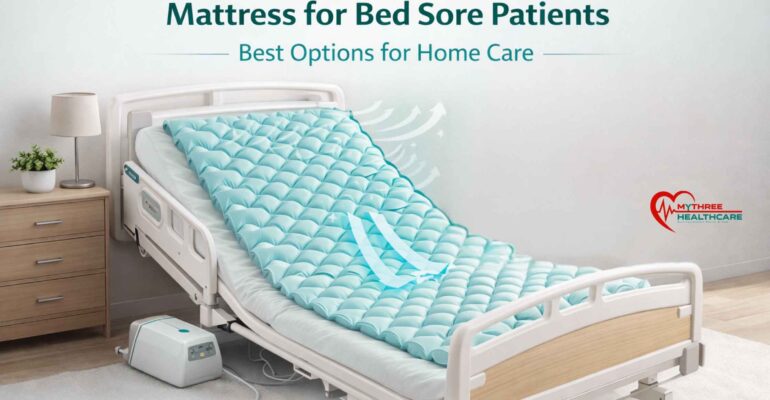
Home care guidance • Pressure sore prevention • Hospital bed & mattress solutions
If you are caring for a loved one who spends long hours in bed, choosing the right mattress is not “just comfort”—it is prevention, protection, and peace of mind. This guide explains the best mattress types for preventing pressure injuries at home, and how Mythree Healthcare can help you rent or purchase the right hospital bed and mattress setup in Bangalore and Hyderabad.
Pressure ulcers (commonly called bed sores) are far more common than most families expect—publicly available studies and clinical reports repeatedly highlight that pressure injuries can affect a significant portion of people with limited mobility, especially those receiving long-term care at home or in healthcare settings. That is why choosing the right mattress for bed sores patients is one of the most impactful decisions you can make in home care: it reduces pressure build-up, improves circulation, and protects fragile skin from repeated damage.
Let’s make it simple: bed sores are not just “redness.” They can become open wounds, painful infections, and long healing journeys. The biggest tragedy is that many cases are preventable with the right setup—starting from the mattress, supported by proper nursing routines, hydration, and timely repositioning.
Need a hospital bed + anti-bedsore mattress at home?
Mythree Healthcare provides hospital beds and other hospital equipment for rent and for purchase.
Fill the form at mythreehealthcare.com/contact/,
call +91 8904139314, or send a WhatsApp message using the website interface.
Mythree Healthcare’s team will call you back and assist you with the rental or purchase.
Why is a pressure-relief mattress essential for bed sore prevention at home?
When a patient stays in one position too long, the body’s weight compresses soft tissue between bone and the mattress surface. This reduces blood flow and oxygen supply to the skin and underlying tissues. Over time, the skin becomes fragile, breaks down, and forms pressure injuries.
A mattress designed for pressure injury prevention works differently from a normal mattress. Instead of being “soft,” it is engineered to: distribute weight evenly, reduce peak pressure points (heels, sacrum, hips, shoulders), and minimize shear forces when the patient is repositioned.
Key home care risk factors
- Limited mobility (stroke, paralysis, fractures, advanced age)
- Diabetes and poor circulation
- Low body weight or muscle loss
- Incontinence or moisture exposure
- Poor nutrition / dehydration
- Incorrect bed positioning, sheets causing friction
How the right mattress helps
- Reduces constant pressure on high-risk areas
- Improves airflow and microclimate control
- Supports posture and correct alignment
- Reduces skin friction and shear
- Complements turning schedules and nursing routines
What is the best mattress for bedsore patient in home care?
The best choice depends on the patient’s mobility level, risk category, body weight, and existing skin condition. For many families, the challenge is that they buy a standard foam mattress thinking it will help—only to realize it still creates pressure hotspots. A better approach is to match the mattress type to the care requirement.
| Mattress type | Best for | Key benefit | Things to watch |
|---|---|---|---|
| High-density pressure relief foam | Mild to moderate risk, home care patients with partial mobility | Even pressure distribution + stability | May not be enough for high-risk or fully bedridden patients |
| Alternating air mattress | High risk / limited mobility patients | Alternates pressure points automatically | Requires power supply; needs correct pressure settings |
| Hybrid (foam + air cells) | Medium to high risk, comfort + prevention | Balanced feel with advanced pressure relief | Costs higher; must be correctly matched to patient weight |
| Low air loss / advanced therapeutic mattress | Very high risk / existing pressure injuries | Microclimate control + strong ulcer prevention | Should be used with clinical guidance |
If you want a simple, safest short answer: for most high-risk home care cases, an alternating air mattress paired with a hospital bed is among the most effective setups. This combination supports pressure relief, better repositioning, and caregiver efficiency—three essentials for prevention.
What is a medical mattress for bed sores and how is it different?
A medical mattress for bed sores is a clinically designed mattress that reduces pressure injury risk through engineered materials and pressure redistribution technology. Unlike regular mattresses made for “sleep comfort,” medical mattresses focus on preventing skin breakdown in patients who spend long durations in bed.
Core features that define a medical-grade mattress
- Pressure redistribution: reduces peak pressure at bony prominences.
- Shear reduction: helps skin resist tearing when repositioning the patient.
- Breathability: supports airflow to manage sweat and moisture.
- Hygiene: easy-to-clean surfaces, infection control friendly design.
- Compatibility: fits hospital beds and supports backrest/head elevation safely.
How does a mattress to prevent bed sores actually work?
A mattress to prevent bed sores works by reducing continuous pressure on specific areas of the body. Think of bed sores as a “time + pressure” problem. When pressure crosses a threshold and stays there, tissues lose oxygen. Preventive mattresses lower that pressure or rotate it, giving tissues time to recover.
Mechanisms used in prevention mattresses
- Weight distribution: spreads load across a wider surface.
- Alternation: air cells inflate/deflate in cycles to change pressure points.
- Microclimate management: reduces moisture and heat under the skin.
- Stability support: maintains posture and reduces sliding friction.
This is exactly why caregivers often notice: once they shift to a pressure-relief mattress, the patient becomes calmer, sleep improves, and the visible redness at high-pressure points reduces over time when used correctly.
Which mattress to avoid bed sores is best for different patient needs?
A mattress to avoid bed sores should be selected like a medical decision—because it supports a medical outcome. At home, most families are trying to manage three things at once: patient safety, caregiver workload, and affordability. The correct solution is the one that meets prevention goals without making daily care harder.
For elderly patients with reduced mobility
- Prefer foam pressure relief or alternating air mattress
- Pair with side rails for safety
- Use moisture-control sheets and skin barrier creams
For post-surgery patients (temporary bed rest)
- Short-term rental can be cost-effective
- Backrest elevation helps breathing and feeding
- Choose stable surface to avoid fall risk
For stroke/paralysis care
- Alternating air mattress recommended for high risk
- Hospital bed essential for positioning
- Reduce shear with proper transfers and draw sheets
For patients with existing pressure sores
- Clinical-grade pressure relief required
- Strict turning schedule + wound care planning
- Consider advanced mattress category if advised
How to choose a mattress for bed sore patients at home (step-by-step checklist)
Confused by options? Use the checklist below to make a clear decision quickly. This helps you avoid the most common mistake families make: choosing a mattress purely based on “softness” rather than medical prevention.
Step 1: assess mobility and risk level
- Can the patient turn independently?
- Is there redness or early pressure injury signs?
- Is the patient thin, dehydrated, or diabetic?
Step 2: match mattress type to risk
- Low risk: high-density foam pressure relief mattress
- Medium risk: hybrid support with higher pressure redistribution
- High risk: alternating air mattress
- Existing ulcers: advanced therapeutic solutions (as guided)
Step 3: check bed compatibility (this is often missed)
- Does it fit hospital bed size and frame?
- Does it remain stable when the backrest is raised?
- Is caregiver repositioning easy and safe?
Step 4: choose rental vs purchase based on timeline
If the care requirement is temporary (post-surgery recovery, fracture healing, short-term mobility restriction), renting can be the smarter, faster option. If long-term care is expected, purchase offers consistent availability and may be more cost-effective over time.
Why pairing a hospital bed with an anti-bedsore mattress changes outcomes
Many people focus only on the mattress, but home care success depends on the full setup. A hospital bed allows safe elevation, posture adjustment, and correct turning techniques. When a caregiver can change position without strain, repositioning happens on time. And when repositioning happens on time, bed sore risk drops dramatically.
Hospital bed advantages for home care
- Backrest elevation: reduces aspiration risk during feeding and supports breathing.
- Knee-rest positioning: reduces sliding and shear on the skin.
- Height adjust: protects caregivers from back injuries and improves transfers.
- Side rails: reduces fall risk and provides patient confidence.
Getting the right mattress quickly in Bangalore and Hyderabad with Mythree Healthcare
Home care is time-sensitive. If a patient is already bedridden, every day without proper pressure management increases risk. This is where Mythree Healthcare becomes an advantage—not only as a medical equipment provider, but as a support partner for families.
Rental support for urgent home care
- Ideal for short-term recovery or trial usage
- Budget-friendly access to medical-grade setups
- Faster deployment than buying and searching across multiple vendors
Purchase support for long-term care
- Best for chronic care needs and ongoing mobility restrictions
- Ensures continuous availability and consistency
- Peace of mind for families managing care over months
Act now before skin breakdown becomes a bigger medical issue.
To rent or purchase medical equipment with Mythree Healthcare, fill and submit the form at
https://mythreehealthcare.com/contact/,
call +91 8904139314, or send a WhatsApp message using the interface on the website.
Mythree Healthcare’s team will call you back and assist you with the rental or purchase.
Common mistakes families make when buying a mattress for bed sore prevention
Families act with the best intentions, but there are a few critical mistakes that can reduce mattress effectiveness:
- Choosing “soft” instead of “pressure relieving”: softness can increase sinking and worsen alignment.
- Ignoring moisture management: heat and sweat increase skin breakdown risk.
- No turning schedule: even the best mattress needs repositioning support.
- Wrong bed height: caregiver difficulty leads to delayed repositioning.
- Buying without guidance: mismatched weight rating reduces performance.
The best way to avoid these is to choose a trusted provider that understands home care realities—space constraints, caregiver strength, and daily practicality—not just product specifications.
About Mythree Healthcare
Mythree Healthcare is a medical equipment provider based in India, specializing in hospital beds and other hospital equipment for rent and for purchase, designed for home care needs across Bangalore and Hyderabad. Whether your requirement is short-term recovery support or long-term patient care, the Mythree Healthcare team helps families choose practical and safe equipment combinations—so your home becomes a better healing environment.
The biggest difference is not only the availability of products—it is the ability to guide you to the right configuration. When families act early, they prevent avoidable complications. When they delay, small redness can become a major wound. And that is why choosing the right mattress and bed setup is not an expense—it is a protection plan.
To get started, fill the form at https://mythreehealthcare.com/contact/, call +91 8904139314, or message through WhatsApp using the interface on the website. Mythree Healthcare’s team will call you back and assist you with the rental or purchase.
Frequently Asked Questions
The best mattress for bed sores patients is one that reduces pressure on bony areas (hips, tailbone, heels), supports comfortable posture, and helps maintain airflow to the skin. For home care, most families choose an alternating pressure air mattress or a high-density foam pressure relief mattress depending on the patient’s risk level and mobility.
Mythree Healthcare supports home caregivers with the right selection guidance, correct sizing, and practical tips to use the mattress safely and effectively (especially for long-term bedrest).
To choose the right mattress for bedsore patient, first assess risk and current skin condition. A good approach is:
- High risk / existing sores / very limited mobility: Alternating pressure air mattress is usually recommended.
- Moderate risk / occasional turning possible: Pressure redistribution foam or hybrid options work well.
- Low risk / preventive support: Quality supportive foam with proper nursing routine may be sufficient.
Mythree Healthcare helps match the mattress type to the patient’s mobility, weight, nursing plan, and budget—so you don’t overspend, yet don’t compromise on safety.
A medical mattress for bed sores is designed to redistribute pressure, reduce shear/friction, and promote breathability—three key factors in bedsore prevention and recovery. Unlike a regular mattress, it focuses on clinical needs such as:
- Pressure relief zones for hip/tailbone/heel areas
- Improved airflow to reduce skin moisture
- Support for long hours of immobility
- Compatibility with hospital-style caregiving routines
Mythree Healthcare offers home-care appropriate clinical mattress solutions and guidance to ensure correct usage, positioning, and long-term durability.
An air mattress is often the best mattress to prevent bed sores for patients who are bedridden, have very low mobility, or already show pressure marks—because alternating pressure reduces constant load on the same skin points.
However, it is not “one-size-fits-all.” Some patients feel more stable and comfortable on high-quality pressure relief foam, especially if they can change posture with assistance. Mythree Healthcare supports families in selecting the right preventive solution based on patient needs, comfort, and risk level.
No. A mattress to avoid bed sores is a powerful preventive tool, but it does not fully replace repositioning, skin checks, hygiene, and nutritional support. Bedsore prevention is always a combination of:
- Pressure redistribution mattress
- Scheduled turning/repositioning (as advised)
- Keeping skin clean and dry
- Managing moisture and heat
- Proper hydration and nutrition
Mythree Healthcare’s approach focuses on “complete home care readiness,” helping caregivers follow best practices alongside the right equipment.
For elderly or post-surgery care, a mattress to prevent bed sores should provide pressure relief without making the surface feel unstable. Key features to look for include:
- Good pressure distribution (especially hips, shoulder blades, tailbone)
- Comfortable firmness to support alignment
- Low noise (for air mattresses) and stable surface feel
- Durable construction for long-term home use
- Easy cleaning and hygienic cover
Mythree Healthcare helps families select a home-friendly solution that supports recovery, sleep quality, and safer caregiving.
Choosing the right bedsore prevention mattress can be confusing because the “best” option depends on mobility, caregiver availability, body weight, and existing skin condition. Mythree Healthcare supports you with:
- Guidance in choosing air/foam options based on patient condition
- Correct sizing and compatibility suggestions for home beds
- Setup instructions and safety best practices
- Support for home-care routines that improve mattress effectiveness
This ensures your investment actually delivers real protection and comfort—not just a product purchase.
Maintenance is essential because hygiene and moisture control directly affect bedsore prevention. For a medical mattress for bed sores, follow these simple home-care steps:
- Use a wipe-clean protective cover (and keep a spare if possible)
- Clean spills quickly to prevent odor, dampness, and bacterial build-up
- Do not place thick, heat-trapping bedding that blocks airflow
- For air mattresses, keep pump vents clean and ensure air cells are functioning properly
- Inspect the surface regularly for wear, leakage, or sagging
Mythree Healthcare can guide caregivers on practical upkeep so the mattress continues to perform safely over time.
Search
Categories